Lifestyle
Independent Living
Health Services
Gallery
About
Contact


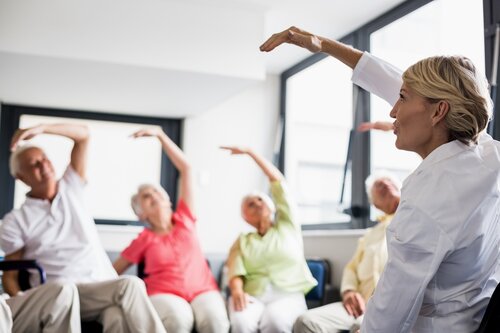
Changes in flexibility are a natural part of aging, but stiffness does not have to determine what you can do. With regular, gentle movement, older adults can continue supporting their range of motion, balance and ability to perform everyday activities.
Yoga is one accessible way to keep the body moving. It combines stretching, controlled movement, balance and breathing—and nearly every pose can be modified to match an individual’s comfort and ability.
You do not need to be able to touch your toes or sit on the floor to begin. Yoga in your 70s and beyond is about helping your body move more comfortably, not forcing it into complicated positions.
Flexibility refers to how easily the muscles and joints move through their available range of motion. When flexibility decreases, everyday tasks may become more difficult. Reaching into a cabinet, bending to put on shoes, turning to look behind you or getting up from a chair can require greater effort.
Maintaining flexibility may help older adults:
Flexibility is only one part of healthy movement. Strength, endurance and balance also play important roles, which is one reason yoga can be so helpful—it often brings several of these elements together.
Yoga uses a series of poses and movements that gradually lengthen muscles and move joints through a comfortable range of motion. Unlike fast or bouncing stretches, yoga generally emphasizes moving slowly and paying attention to how the body feels.
Regular practice may help loosen areas that commonly become tight with age, including the hips, hamstrings, calves, shoulders and back. Over time, movements that once felt restricted may begin to feel more natural.
The goal should never be to stretch as far as possible. A gentle stretch performed consistently is more valuable than forcing the body into a position that causes pain.
Flexibility and balance work together. Moving safely requires the ability to shift weight, change direction and respond when the body becomes unsteady.
Many yoga poses strengthen the muscles that support posture and stability. Standing poses may challenge balance, while seated and chair-supported versions can provide similar movement with additional security.
The National Center for Complementary and Integrative Health reports that studies have found evidence that yoga may improve balance in community-dwelling older adults.
Improved balance does not guarantee that someone will avoid a fall, but combining balance practice with strength training, appropriate medical care and a safe environment can contribute to greater confidence.
The benefits of flexibility become most meaningful when they translate into daily life. Yoga movements may support the same abilities used to:
As these movements become more comfortable, older adults may feel more confident participating in other forms of activity, such as walking, gardening, swimming or traveling.
Yoga does not have to take place on a floor mat. Chair yoga allows participants to perform stretches, breathing exercises and modified poses while seated or using a chair for support.
It can be a good option for people who:
The National Center for Complementary and Integrative Health identifies chair yoga as a gentler option for older adults with limited mobility.
Using a chair does not make the practice less meaningful. It simply adapts yoga to the person rather than expecting the person to adapt to a traditional pose.
Stretching is often easier when the body is relaxed. Yoga combines movement with slow, intentional breathing, which may help release unnecessary muscle tension.
Focusing on the breath can also encourage participants to slow down and become more aware of how their bodies feel. This awareness makes it easier to recognize the difference between a comfortable stretch and a movement that should be modified or stopped.
For many people, this combination of breathing and movement also creates a sense of calm. Some research suggests yoga may help with stress and sleep, although individual results vary.
Yoga may be practiced individually, but a group class provides additional benefits. A qualified instructor can demonstrate modifications, offer reminders about safe form and help participants choose an appropriate level of challenge.
Classes also provide motivation and social connection. Seeing familiar faces each week can turn exercise into an experience participants look forward to rather than another task on the calendar.
Shared activity often creates conversation, encouragement and laughter—all important parts of whole-person wellness.
Yoga is generally considered safe when practiced correctly, but older adults may need to modify or avoid certain poses. Safety is more important than matching the person beside you.
Keep these suggestions in mind:
Older adults with osteoporosis, joint replacements, glaucoma, balance problems, spinal conditions or other medical concerns should speak with their healthcare provider before beginning yoga. Some poses may need to be modified or avoided.
Yoga does not require dramatic movements to be effective. A few minutes of gentle practice performed regularly may be more helpful than an occasional intense session.
Progress may appear in small ways: reaching a little farther, turning more comfortably or feeling less stiff when getting out of bed. These everyday improvements are often more important than mastering a particular pose.
The purpose of yoga is not perfection. It is creating a practice that helps the body remain capable, comfortable and connected.
At The Crossings in League City, wellness includes more than physical exercise. It encompasses the social, emotional, intellectual and spiritual parts of life as well.
Yoga is among the many wellness opportunities available at The Crossings, along with fitness classes, water aerobics, gardening, educational programs, social activities and more. These experiences make it easier for residents to remain active while building friendships and exploring new interests.
It is never too late to begin moving with greater intention. Whether practiced standing, seated or with supportive modifications, yoga can help older adults improve flexibility and approach each day with greater comfort and confidence.