Lifestyle
Independent Living
Health Services
Gallery
About
Contact


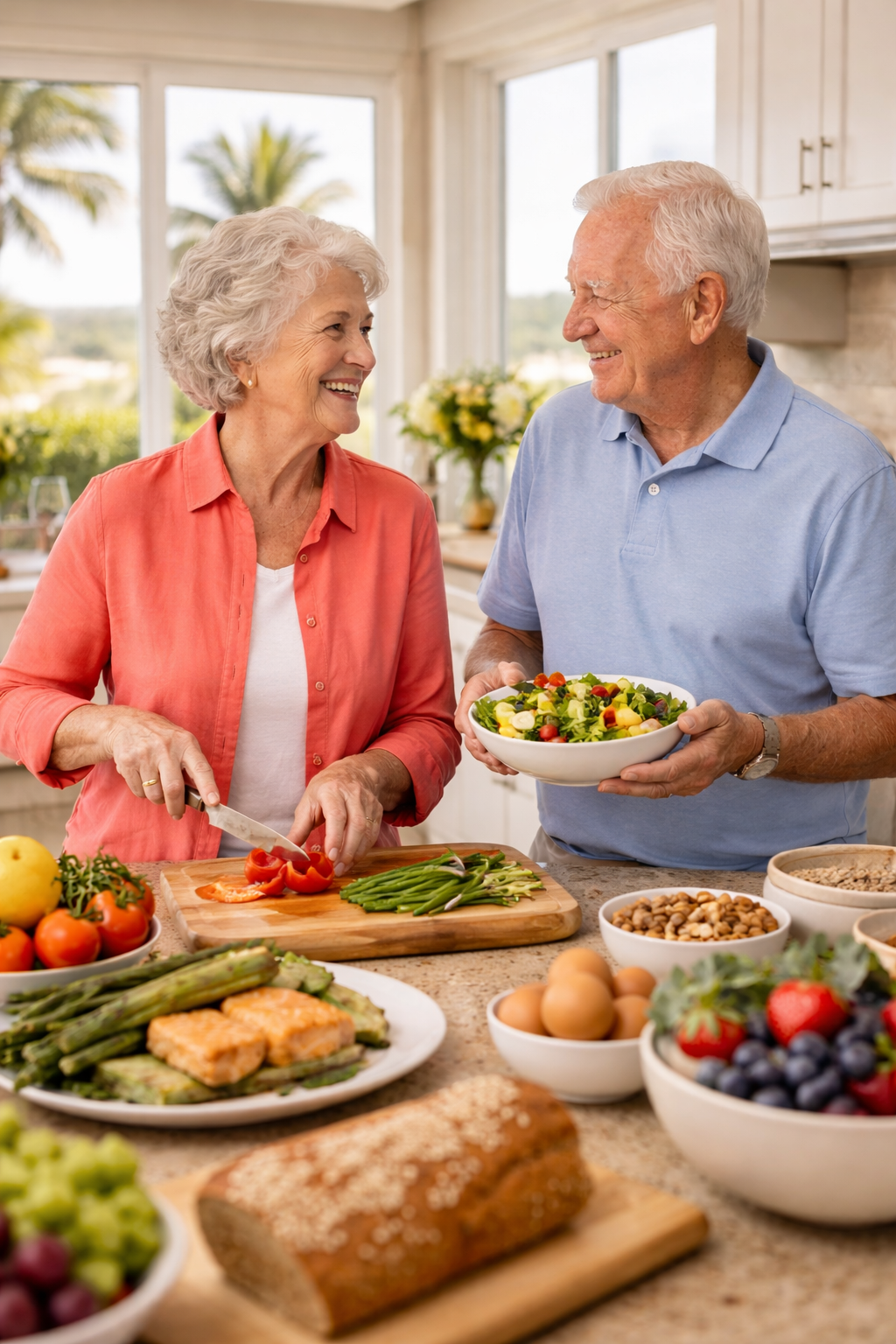
For older adults, nutrition isn’t about dieting—it’s about fueling your body for strength, energy, and independence. Whether you’re living at home or in a community like Bayview or nearby La Porte, the right foods (in the right amounts) can support everything from mobility to memory. And the good news? It doesn’t have to be complicated.
Aim for at least 1.5–2 cups of fruit and 2–3 cups of vegetables every day.
A colorful plate isn’t just pretty—it supports immunity, heart health, and digestion.
As we age, protein becomes even more important. Most seniors should aim for:
This helps maintain muscle, reduce fall risk, and keep energy levels steady.
Whole grains provide fiber and long-lasting energy.
Swap white bread or rice for whole grain options whenever possible.
Digestive comfort becomes more important with age.
Fiber also supports heart health and helps prevent common issues like constipation.
Calcium and vitamin D are essential for maintaining bone health.
This is especially important for preventing fractures and maintaining mobility.
Not all fats are bad—some are essential.
These support brain health and reduce inflammation.
Instead of overthinking meals, aim for a rhythm like this:
Living near the Texas Gulf Coast gives seniors a big advantage—fresh, accessible foods:
Community living—like what many seniors experience at The Crossings in League City—also makes balanced eating easier with prepared meals, social dining, and fewer barriers to healthy choices.
Healthy eating for seniors isn’t about restriction—it’s about consistency and balance.
Focus on:
Small, steady habits can make a big difference—helping you stay active, independent, and fully engaged in the life you’re living right here in the Bay Area.